PROGRAM
|
WORLDING THE GLOBAL
The Arts in the Age of Decolonization 8 November-10 November 2019 | 8 novembre-10 novembre 2019 FOR FULL PROGRAMMING CLICK HERE |
|
About worlding public cultures
Montreal Team (Faculty): May Chew (Concordia University), Barbara Clausen (Université du Québec à Montréal), Analays Alvarez Hernandez (Université de Montréal), Alice Ming Wai Jim (Concordia University), Maya Rae Oppenheimer (Concordia University), Edith-Anne Pageot (Université du Québec à Montréal).
Research Coordinators: Varda Nisar (PhD student, Concordia University), Ashley Raghubir (MA student, Concordia University).
Working with universities, museums, and other cultural organizations, the transnational collaborative research project Worlding Public Cultures: The Arts and Social Innovation seeks to reimagine cultural and educational institutions in order to better mobilize them as agents of social and political change that increase the understanding of global complexities. The project interrogates, from historical and contemporary perspectives, the concepts of “worlding” and “public cultures.” What does worlding mean and what is meant by public cultures? What are the implications of these entangled terms for the visual arts and global art histories? And, in this current moment of fear, anguish, and loss generated by the ongoing and future global effects of COVID-19 and racial injustice, what purpose does worlding public cultures serve? These are some of the Worlding Public Cultures (WPC) project’s guiding questions in an effort to multiply and decenter knowledge, narratives, and points of view.
“In this time of uncertainty and hyper-change, we need more than ever to think of the anticipatory – how to anticipate the future, to move from emergency to emergence,” said Alice Jim (Concordia University). “The arts are crucial to the efforts of imagining what the world’s future can be.”
Maya Rae Oppenheimer (Concordia University) adds that paying attention to how careful practice nestles alongside theoretical, anticipatory, imminent concerns is prevalent in these discussions. “Working through an ecosystem of intertwined futures is akin to mobilizing and empowering pedagogical moments that ricochet back and forth from the individual to the collective and back again; such exchanges are unfolding under new conditions, and the ability to pivot and to build upon imaginative, collaborative improvisations must be part of the work. This practice and rehearsal help us welcome lateral growth, tensile strengths and radical inertias for new work in spaces that are often hierarchical or pre-determined.”
Equally critical is an acknowledgement of, and responsiveness to, the existing systemic inequity and precarity that this period of crisis amplifies for QTBIPOC2S+ folks, artists, activists, independent arts and culture workers, and other marginalized communities. In response to the current context, the project aims to radically adapt its frame and modes of research and pedagogy so as to be informed by “compassion, humility, and a commitment to adaptive practice,” said Édith-Anne Pageot (Université du Québec à Montréal).
La crise sanitaire, la crise écologique et la crise politique commandent une profonde restructuration des régimes de pouvoir et de savoirs fondés sur le maillage productivité-colonialisme-patriarcat. Il ne suffit plus d’interroger le(s) contenu(s), mais il faut aussi interroger le(s) contenant(s), c’est-à-dire les approches, les méthodes, les structures, les hiérarchies, les catégories, les nomenclatures, etc., tout autant que l'individu ou l’entité qui effectue cette remise en question : Qui interroge ? Et d’où ? “Cette restructuration repose d’abord sur la reconnaissance de l’impérialisme cognitif de nos propres environnements de recherche, d’enseignement et des lieux de diffusion de l’art contemporain,” selon Pageot. Elle repose également sur un dialogue entre différentes postures épistémologiques. L’angle pluriversel et interversel de notre projet sollicite justement une production de connaissances à la croisée d’une multitude de traditions de pensées. “Par exemple, eu égard à la position géographique du Canada et à ses liens historiques avec l’Amérique latine et les Caraïbes, une des avenues privilégiées par notre équipe de chercheuses est celle de bâtir, avec ces régions, des réseaux d’échange académiques et artistiques, ainsi que de consolider ceux existants,” explique Analays Alvarez Hernandez (Université de Montréal). “Le projet préconise ainsi l'adoption d’incertitudes fécondes et de postures d’agentivité et de déterritorialisation, en déplaçant notamment les lieux d’énonciation, ” affirment Alvarez Hernandez et Pageot.
* * * * * * *
Worlding Public Cultures is a project of the Transnational and Transcultural Art and Culture Exchange (TrACE). The TrACE network brings together an extraordinary range of geographical and interdisciplinary perspectives from scholars, curators, artists and early-career researchers.
The Montreal WPC team consists of Alice Ming Wai Jim, May Chew and Maya Rae Oppenheimer from Concordia University, Analays Alvarez Hernandez from the Université de Montréal, and Barbara Clausen and Édith-Anne Pageot from the Université du Québec à Montréal, with graduate students Varda Nisar and Ashley Raghubir.
National and international partners and team members also include: Birgit Hopfener, Ruth Phillips, Carmen Robertson and Ming Tiampo (co-principal investigator) from Carleton University; Paul Goodwin (co-principal investigator) from University of the Arts London, Chiara de Cesari from Amsterdam University; Monica Juneja and Franziska Koch from Heidelberg University; Toshio Watanabe from the University of East Anglia and Wayne Modest from Vrije University. The TrACE network collaborates with major research institutions and art museums, including ici Berlin, the National Gallery of Canada, Tate Modern and Tropenmuseum Amsterdam.
SSHRC and the Fonds de recherche du Québec – Société et culture (FRQSC) provided the Canadian portions of this international grant.
Social Innovation Grant from the Trans-Atlantic Platform for the Social Sciences and Humanities (T-AP)
Research Coordinators: Varda Nisar (PhD student, Concordia University), Ashley Raghubir (MA student, Concordia University).
Working with universities, museums, and other cultural organizations, the transnational collaborative research project Worlding Public Cultures: The Arts and Social Innovation seeks to reimagine cultural and educational institutions in order to better mobilize them as agents of social and political change that increase the understanding of global complexities. The project interrogates, from historical and contemporary perspectives, the concepts of “worlding” and “public cultures.” What does worlding mean and what is meant by public cultures? What are the implications of these entangled terms for the visual arts and global art histories? And, in this current moment of fear, anguish, and loss generated by the ongoing and future global effects of COVID-19 and racial injustice, what purpose does worlding public cultures serve? These are some of the Worlding Public Cultures (WPC) project’s guiding questions in an effort to multiply and decenter knowledge, narratives, and points of view.
“In this time of uncertainty and hyper-change, we need more than ever to think of the anticipatory – how to anticipate the future, to move from emergency to emergence,” said Alice Jim (Concordia University). “The arts are crucial to the efforts of imagining what the world’s future can be.”
Maya Rae Oppenheimer (Concordia University) adds that paying attention to how careful practice nestles alongside theoretical, anticipatory, imminent concerns is prevalent in these discussions. “Working through an ecosystem of intertwined futures is akin to mobilizing and empowering pedagogical moments that ricochet back and forth from the individual to the collective and back again; such exchanges are unfolding under new conditions, and the ability to pivot and to build upon imaginative, collaborative improvisations must be part of the work. This practice and rehearsal help us welcome lateral growth, tensile strengths and radical inertias for new work in spaces that are often hierarchical or pre-determined.”
Equally critical is an acknowledgement of, and responsiveness to, the existing systemic inequity and precarity that this period of crisis amplifies for QTBIPOC2S+ folks, artists, activists, independent arts and culture workers, and other marginalized communities. In response to the current context, the project aims to radically adapt its frame and modes of research and pedagogy so as to be informed by “compassion, humility, and a commitment to adaptive practice,” said Édith-Anne Pageot (Université du Québec à Montréal).
La crise sanitaire, la crise écologique et la crise politique commandent une profonde restructuration des régimes de pouvoir et de savoirs fondés sur le maillage productivité-colonialisme-patriarcat. Il ne suffit plus d’interroger le(s) contenu(s), mais il faut aussi interroger le(s) contenant(s), c’est-à-dire les approches, les méthodes, les structures, les hiérarchies, les catégories, les nomenclatures, etc., tout autant que l'individu ou l’entité qui effectue cette remise en question : Qui interroge ? Et d’où ? “Cette restructuration repose d’abord sur la reconnaissance de l’impérialisme cognitif de nos propres environnements de recherche, d’enseignement et des lieux de diffusion de l’art contemporain,” selon Pageot. Elle repose également sur un dialogue entre différentes postures épistémologiques. L’angle pluriversel et interversel de notre projet sollicite justement une production de connaissances à la croisée d’une multitude de traditions de pensées. “Par exemple, eu égard à la position géographique du Canada et à ses liens historiques avec l’Amérique latine et les Caraïbes, une des avenues privilégiées par notre équipe de chercheuses est celle de bâtir, avec ces régions, des réseaux d’échange académiques et artistiques, ainsi que de consolider ceux existants,” explique Analays Alvarez Hernandez (Université de Montréal). “Le projet préconise ainsi l'adoption d’incertitudes fécondes et de postures d’agentivité et de déterritorialisation, en déplaçant notamment les lieux d’énonciation, ” affirment Alvarez Hernandez et Pageot.
* * * * * * *
Worlding Public Cultures is a project of the Transnational and Transcultural Art and Culture Exchange (TrACE). The TrACE network brings together an extraordinary range of geographical and interdisciplinary perspectives from scholars, curators, artists and early-career researchers.
The Montreal WPC team consists of Alice Ming Wai Jim, May Chew and Maya Rae Oppenheimer from Concordia University, Analays Alvarez Hernandez from the Université de Montréal, and Barbara Clausen and Édith-Anne Pageot from the Université du Québec à Montréal, with graduate students Varda Nisar and Ashley Raghubir.
National and international partners and team members also include: Birgit Hopfener, Ruth Phillips, Carmen Robertson and Ming Tiampo (co-principal investigator) from Carleton University; Paul Goodwin (co-principal investigator) from University of the Arts London, Chiara de Cesari from Amsterdam University; Monica Juneja and Franziska Koch from Heidelberg University; Toshio Watanabe from the University of East Anglia and Wayne Modest from Vrije University. The TrACE network collaborates with major research institutions and art museums, including ici Berlin, the National Gallery of Canada, Tate Modern and Tropenmuseum Amsterdam.
SSHRC and the Fonds de recherche du Québec – Société et culture (FRQSC) provided the Canadian portions of this international grant.
Social Innovation Grant from the Trans-Atlantic Platform for the Social Sciences and Humanities (T-AP)
|
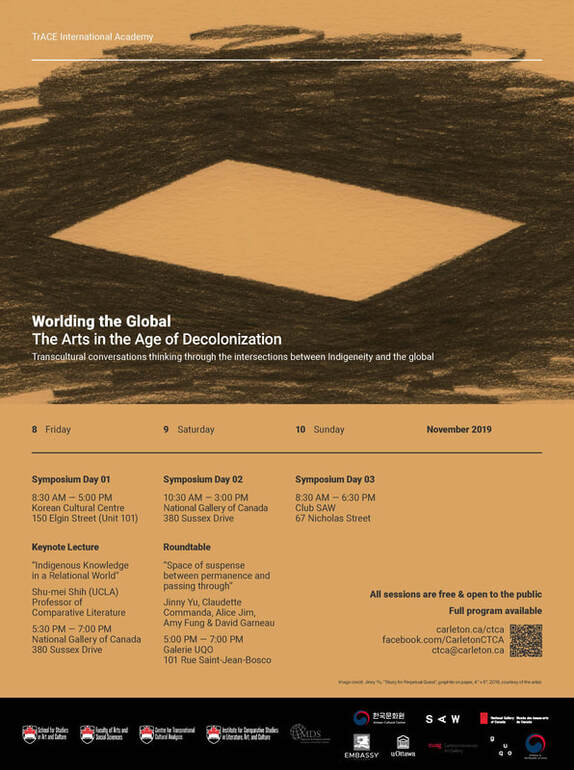
The Carleton University Centre for Transnational Cultural Analysis, in partnership with the institutional members of TrACE (Transnational and Transcultural Art and Culture Exchange), is proud to present Worlding the Global: The Arts in the Age of Decolonization, an international academy designed to collaboratively re-imagine and pluralize the ‘global’ from multiple geocultural perspectives. Working in collaboration with Àbadakone / Continuous Fire / Feu continuel, the International Indigenous Art Exhibition at the National Gallery of Canada, the academy takes as its ethical starting point its situation on unceded Algonquin territory as well as the city of Ottawa’s entangled settler colonial, migrant, diasporic, and other transnational and transcultural histories. Bringing together local, national, and international scholars, artists, activists, and curators, the academy will facilitate a multi-pronged dialogue on the global in the arts and culture, proposing to understand our global world as a temporally constituted and open-ended process of lived interrelations and interconnections (Glissant 1997; Cheah 2016; Shih 2012).
For more information and full programming: click here. |
PHOTOS
PRESS
NAVIGATING THE COMPLEXITIES OF OUR GLOBAL WORLD THROUGH ART
04/22/2020
Carleton and Concordia universities take a leading global role in “Worlding Public Cultures: The Arts and Social Innovation”
Carleton University’s Birgit Hopfener and co-principal investigator (PI) Ming Tiampo, and Alice Ming Wai Jim from Concordia University, are leading members of the international Transnational and Transcultural Art and Culture Exchange (TrACE) team that won a Social Innovation Grant from the Trans-Atlantic Platform for the Social Sciences and Humanities (T-AP) for their collaborative research project, Worlding Public Cultures: The Arts and Social Innovation.
“Only 10 of 75 teams were successful in receiving this grant internationally, and that says something about the quality of the proposal,” said Carleton President Benoit-Antoine Bacon. “It is an extremely timely endeavour during a period of acute global and societal challenges. TrACE aims to be a network that focuses on transnational and transcultural perspectives. It is a very ambitious, multi-institutional, international project that will re-examine and reframe what we refer to as global.”
The project was launched last November at Carleton prior to the team’s Trans-Atlantic Platform grant success, through the first of four international conferences. Funded by the Social Sciences and Humanities Research Council (SSHRC), the Worlding the Global: The Arts in the Age of Decolonization conference launched the project with research on the connections between global and Indigenous perspectives on art that will inform the project as it moves to Amsterdam, London, Berlin/Heidelberg and Montreal.
Worlding Public Cultures seeks to change discussions about our globally interconnected yet conflicted world through art, exhibitions, conferences and writing about art and its cultural, historical and socio-political realities. It seeks to tell new stories from multiple regional perspectives about our transnational and transcultural present, our shared and sometimes difficult past and to imagine new ways of living together in the future.
The project draws upon the concept of “worlding,” which describes global history from multiple perspectives rather than narrating it from a single dominant standpoint. This bottom-up approach to global art history demonstrates the rich cultural and intellectual fabrics of global migrations and movements rather than focussing on the effects of top-down global capitalism, imperialism, and colonialism.
Working with universities, museums and other cultural spaces, the project reimagines cultural and educational institutions in order to better use them as agents of social and political change that increase the understanding of global complexities.
“In this time of uncertainty and hyper-change, we need more than ever to think of the anticipatory — how to anticipate the future, to move from emergency to emergence,” said Jim, professor in Art History. “The arts are crucial to the efforts of imagining what the world’s future can be.”
The TrACE network brings together an extraordinary range of geographical and interdisciplinary perspectives from scholars, curators, artists and early-career researchers. In November, Carleton, Concordia University, University of the Arts London and Heidelberg University signed a memorandum of understanding formalizing the TrACE partnership to enable student and faculty mobility in addition to research collaborations.
“This agreement makes it possible for students to consult with professors across the network, and we are working on building structures that allow students to study across the network—this opens very exciting opportunities for all of our universities,” said Hopfener, associate professor of Art History.
“Worlding Public Cultures allows us to share some of the insights that we have developed in Canada, working at the intersection of multiple cultures, languages, diasporas and settler-colonial and Indigenous histories,” said Tiampo. “Equally, each of our partners brings different expertise to the table, enabling us to compare and adapt approaches. In other words, we hope to use art to change the way people feel and think about the cultural impacts of globalization at a time of rising nationalism.”
The Canadian team consists of Hopfener, Ruth Phillips, Carmen Robertson and Tiampo from Carleton, Jim, May Chew and Maya Rae Oppenheimer from Concordia, Analays Alvarez Hernandez from Université de Montréal, and Barbara Clausen and Édith Anne Pageot from Université du Québec à Montréal.
International partners and team members include: co-PI Paul Goodwin from University of the Arts London, Chiara de Cesari from Amsterdam University, Monica Juneja and Franziska Koch from Heidelberg University, Toshio Watanabe from the University of East Anglia and Wayne Modest from Vrije University. In addition to the core academic team, the project collaborates with major research institutions and art museums, including ici Berlin, the National Gallery of Canada, Tate Modern and Tropenmuseum Amsterdam. SSHRC and the Fonds de recherche du Québec – Société et culture (FRQSC) provided the Canadian portions of this international grant.
For more information: click here.
Carleton and Concordia universities take a leading global role in “Worlding Public Cultures: The Arts and Social Innovation”
Carleton University’s Birgit Hopfener and co-principal investigator (PI) Ming Tiampo, and Alice Ming Wai Jim from Concordia University, are leading members of the international Transnational and Transcultural Art and Culture Exchange (TrACE) team that won a Social Innovation Grant from the Trans-Atlantic Platform for the Social Sciences and Humanities (T-AP) for their collaborative research project, Worlding Public Cultures: The Arts and Social Innovation.
“Only 10 of 75 teams were successful in receiving this grant internationally, and that says something about the quality of the proposal,” said Carleton President Benoit-Antoine Bacon. “It is an extremely timely endeavour during a period of acute global and societal challenges. TrACE aims to be a network that focuses on transnational and transcultural perspectives. It is a very ambitious, multi-institutional, international project that will re-examine and reframe what we refer to as global.”
The project was launched last November at Carleton prior to the team’s Trans-Atlantic Platform grant success, through the first of four international conferences. Funded by the Social Sciences and Humanities Research Council (SSHRC), the Worlding the Global: The Arts in the Age of Decolonization conference launched the project with research on the connections between global and Indigenous perspectives on art that will inform the project as it moves to Amsterdam, London, Berlin/Heidelberg and Montreal.
Worlding Public Cultures seeks to change discussions about our globally interconnected yet conflicted world through art, exhibitions, conferences and writing about art and its cultural, historical and socio-political realities. It seeks to tell new stories from multiple regional perspectives about our transnational and transcultural present, our shared and sometimes difficult past and to imagine new ways of living together in the future.
The project draws upon the concept of “worlding,” which describes global history from multiple perspectives rather than narrating it from a single dominant standpoint. This bottom-up approach to global art history demonstrates the rich cultural and intellectual fabrics of global migrations and movements rather than focussing on the effects of top-down global capitalism, imperialism, and colonialism.
Working with universities, museums and other cultural spaces, the project reimagines cultural and educational institutions in order to better use them as agents of social and political change that increase the understanding of global complexities.
“In this time of uncertainty and hyper-change, we need more than ever to think of the anticipatory — how to anticipate the future, to move from emergency to emergence,” said Jim, professor in Art History. “The arts are crucial to the efforts of imagining what the world’s future can be.”
The TrACE network brings together an extraordinary range of geographical and interdisciplinary perspectives from scholars, curators, artists and early-career researchers. In November, Carleton, Concordia University, University of the Arts London and Heidelberg University signed a memorandum of understanding formalizing the TrACE partnership to enable student and faculty mobility in addition to research collaborations.
“This agreement makes it possible for students to consult with professors across the network, and we are working on building structures that allow students to study across the network—this opens very exciting opportunities for all of our universities,” said Hopfener, associate professor of Art History.
“Worlding Public Cultures allows us to share some of the insights that we have developed in Canada, working at the intersection of multiple cultures, languages, diasporas and settler-colonial and Indigenous histories,” said Tiampo. “Equally, each of our partners brings different expertise to the table, enabling us to compare and adapt approaches. In other words, we hope to use art to change the way people feel and think about the cultural impacts of globalization at a time of rising nationalism.”
The Canadian team consists of Hopfener, Ruth Phillips, Carmen Robertson and Tiampo from Carleton, Jim, May Chew and Maya Rae Oppenheimer from Concordia, Analays Alvarez Hernandez from Université de Montréal, and Barbara Clausen and Édith Anne Pageot from Université du Québec à Montréal.
International partners and team members include: co-PI Paul Goodwin from University of the Arts London, Chiara de Cesari from Amsterdam University, Monica Juneja and Franziska Koch from Heidelberg University, Toshio Watanabe from the University of East Anglia and Wayne Modest from Vrije University. In addition to the core academic team, the project collaborates with major research institutions and art museums, including ici Berlin, the National Gallery of Canada, Tate Modern and Tropenmuseum Amsterdam. SSHRC and the Fonds de recherche du Québec – Société et culture (FRQSC) provided the Canadian portions of this international grant.
For more information: click here.
TEAM
FACULTY MEMBERS

|
Alice Ming Wai Jim is Professor and Concordia University Research Chair in Ethnocultural Art Histories in Montreal, Canada. She is co-editor of the journal Asian Diasporic Visual Cultures and the Americas (Brill with Concordia and NYU). Jim is also Adjunct Professor in Graduate Studies at OCAD University, Toronto (2021-2024).
MORE
As an art historian, curator and cultural organizer, her research and teaching are in the fields of contemporary art,media art, ethnocultural and global art histories, international art exhibitions, and critical curatorial studies, with an interest in contemporary Asian art and global Asian diasporic art from a transnational perspective. Focusing primarily on contemporary Asian Canadian and African Canadian artists, she has curated exhibitions of over fifty artists of color and Indigenous artists and organized major scholarly events within academic settings and for the broader arts community in Canada and internationally. She has also been involved in a leadership capacity in several formal partnerships involving international networking and community building initiatives, with a strong commitment to research and social justice. She has presented at numerous national and international conferences and her publications appear widely in peer-reviewed journals, book anthologies, and exhibition catalogues. Research publications include contributions to Narratives Unfolding: National Art Histories in an Unfinished World (2017); Third Text; Desire/Change:Contemporary Feminist Art in Canada (2017); Mass Effect: Art and the Internet in the 21st Century (2015), and Negotiations in a Vacant Lot:Studying the Visual in Canada (2014). In 2017, she curated DIY Haunt: Yen-Chao Lin (Oboro, Montreal) and Animate: Diyan Achjadi and Alisi Telengut at Carleton University Art Gallery, Ottawa. Jim co-edited, with Marie Fraser, the fall 2018 issue of RACAR on the theme of “Critical Curating.” Jim is the 2015 recipient of the Centre de documentation d'Artexte Award for Research in Contemporary Art. She received the Faculty of Fine Arts Distinguished Teaching Award in 2014 and the Christopher Jackson Teaching Award from the Department of Art History in 2016.She has been a member of UAAC (Universities Art Association of Canada)since 1994; and CAA (College Art Association) since 1999; a representative member and panel committee chair of the CAA Affiliated Society, the Diasporic Asian Art Network (DAAN), since 2009; a research associate of Centre for Transnational Cultural Analysis (CTCA), Carleton University, Ottawa, since 2009; and a research member of the NYU Global Asia/Pacific Art Exchange (GAX) since 2014. For more information click here. |

|
Dr. Analays Alvarez Hernandez is a Havana-born art historian and independent curator based in Montréal/Tiohti:áke/Mooniyang as an uninvited guest. She has received a bachelor’s degree in Art History (2005) from the Universidad de La Habana, and her doctorate (2015) from the Université du Québec à Montréal. Since 2019, she is Assistant Professor of Global Art in the Département d’histoire de l’art et d’études cinématographiques at the Université de Montréal.
MORE
Her research focuses on contemporary art, with an emphasis on commemoration and public art, global art histories and diasporas, Latinx-Canadian art, and curating. In the past, she has also taught at the University of Toronto and the University of Ottawa. Her main research projects focus on “domestic art galleries” in (post)socialist societies, as well as on the activity of Latinx-Canadian artists in Montréal in the 21st century. She has co-edited Latin American Art(ists) from/in Canada: Expanding Narratives, Territories, and Perspectives (Latin American and Latinx Visual Culture journal, University of California Press, Winter, 2022) and “Revised Commemoration” in Public Art: What Future for the Monument? (RACAR journal, Universities Art Association of Canada, Fall, 2021). Alongside her academic research and teaching experience, Alvarez Hernandez has organized several exhibitions in Montreal, Havana, and Toronto as an independent curator. She also sits on the board of the artist-run center OBORO and is a member of the Culture Montréal’s Commission permanente de l’art public. Keywords that highlight my research interests: Global arts histories, contemporary art, public art, monuments and memorials, diasporas, ethnocultural communities in Canada, contemporary Latin American art, Latino Canadian art, contemporary, Cuban art, curating. |
|
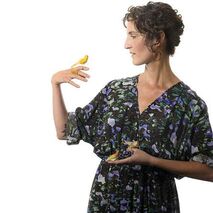
May Chew is an Assistant Professor at the Mel Hoppenheim School of Cinema and Department of Art History at Concordia University and has received her PhD in Cultural Studies at Queen’s University, and held a postdoctoral fellowship at York University’s Sensorium Centre for Digital Arts &Technology.
MORE
Her current research focuses on interactive and immersive technologies in diverse museum and exhibit spaces across Canada, and how these technologies facilitate the material practice of nation and cultural citizenship. Her recent work includes a chapter in the anthology Material Cultures in Canada (WLU Press, 2015); articles in Imaginations, the International Journal of Heritage Studies, the Journal of Canadian Art History; and Public 57: Archives/Counter-Archives, which she co-edited with Susan Lord and Janine Marchessault. She is a collaborator of the Archive/Counter-Archive (https://counterarchive.ca/) project, and a member of the Ethnocultural Art Histories Research in Media group (https://www.ethnoculturalarts.com/eahr--media.html) Keywords that highlight my research interests: visual and material cultures; cultural studies; museums and technologies; interactivity and immersion; archives; haunting and spectrality; public art and social engagement For more information click here. |
|
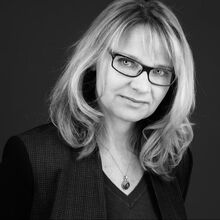
Maya Rae Oppenheimer joined the Faculty of Fine Arts at Concordia University in September 2017 as Assistant Professor in Art History and now works across the Department of Studio Arts and Interdisciplinary Studies. Maya holds a PhD in Humanities and Cultural Studies from the London Consortium (University of London).
MORE
Maya Rae Oppenheimer is a daughter, sister, aunt, plant-mother, friend and colleague who receives financial remuneration as a writer/researcher/artist/educator. She preoccupies herself with writing as social practice and the tangles of historical narratives that inform our contemporary worldviews. Structures of institutional knowledge formation and validation are often the focus of her inquiries, from museum narratives to histories of social psychology. Experimental writing, performance, radical pedagogy, wandering, DIY tactics and rogue archival inquiries are part of the tool-kit she brings to reconsidering and recalibrating histories and ways of knowing and being in the world. She is active in curricular development for 21st century art schools and sits on various cross-university curriculum committees; she is Head of the Interdisciplinary Studies Area in the Faculty of Fine Art. Maya holds a PhD in Humanities and Cultural Studies from the London Consortium (University of London). Before returning to Canada after a decade in London (UK), Maya: taught at the Royal College of Art, Imperial College London, and the Cass School of Art and Design; worked as a member of earnest, experimental art collectives; held various research positions at the Victoria & Albert Museum’s Research Department; began publishing and editing interdisciplinary projects, both within and beyond peer-review protocols, some of which are open access via academia.edu; served two terms as Executive Trustee for the Design History Society; showed art in sundry spaces including the Science Museum (London, UK), the Rag Factory (London, UK), GV Arts (London, UK), and Cabinet (NYC); was co-director of Metalab (London, UK) an experimental research platform running across the Royal College of Art and University of London from 2012-2017. |
|
Edith-Anne Pageot; Spécialiste des modernismes au Québec et au Canada, Edith-Anne Pageot est professeure au département d’histoire de l’art de l’UQAM. Visant le décentrement épistémologique, ses recherches s’intéressent aux logiques transculturelles et transnationales qui traversent les modes de production et d’exposition des objets d’art et d’artisanat. Elle est membre de l’IREF, du CRILCQ et du CIERA. En collaboration avec une équipe de chercheurs autochtones et allochtones, elle a coréalisé le premier MOOC, en français, sur les arts autochtones, Ohtehra' l'art autochtone aujourd'hui.
|
|
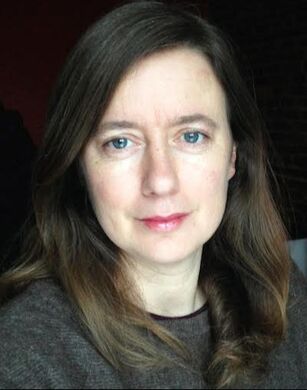
Dr. Barbara Clausen is Associate Professor for contemporary art and performance in the art history department at the University of Québec in Montréal (UQAM) and an independent curator. Since 2000 she has lectured and written extensively on the historiography and institutionalization of performance-based art practices and the parallel discourses surrounding the politics of the body and the archive, articulated through the site specificity of the exhibition. In 2010 Clausen received her PhD from the University of Vienna, Austria and has over the last ten years curated and collaborated on numerous exhibitions and performance series in Europe as well as North America, including After the Act The (Re)Presentation of Performance Art (2005) and Wieder und Wider / Again and Against: (2006) as well as thet exhibition and performance series Push and Pull I and II (2010-2011) at mumok (Museum of Modern Art Stiftung Ludwig), the Tanzquartier in Vienna as well as TATE Modern in London. In 2016 she curated the first Canadian exhibition of Joan Jonas’ work, entitled From Away and the event series Affinities at DHC / Art and Phi Centre in Montreal.
MORE
Since 2014 Clausen is the director of FRQSC funded research project An Annotated Bibliography in Realtime: Performance Art in Quebec and Canada (2014-2019) as well as her current research project Keeping it Live (2018 - 2022), funded by the Social Sciences and Humanities Research Council of Canada). She is the Curatorial Research Director of the Joan Jonas Knowledge Base, which is part of The Artists Archive Initiative at New York University (2017-2020) in collaboration Glenn Wharton (Museum Studies) and Denna Engel (Computer Science). She is a co-applicant member of Hexagram UQAM Network in Montreal, and, next to her research association with the ZeM in 2018/2019, a Visiting Research Fellow at TATE Britain and a Visiting Scholar at the programme for Museum Studies at NYU from 2018 - 2020. Barbara Clausen’s research is dedicated to thinking about performance’s representational politics as a hybrid art form in the tension field of the live and the mediated. One of her main objectives is to study the political and cultural impact of live and performance based art practices in the visual arts as an increasingly fluid medial entity that oscillates between affect driven agency and conceptual site-specificity - asking how the ecologies and networks of artistic interests, curatorial choices, and institutional and ideological politics at play, are anchored in the reality and imaginary of the exhibition as a liminal site, fed by the desire for immediacy and authentic experience as much as driven by the instability of the archive and the projected accessibility of the infinite. Keywords that highlight my research interests: Contemporary Art and Performance, Curating, historiography, institutionalization of performance-based art practices, parallel discourses surrounding the politics of the body and the archive Blurb of University UQAM is a dynamic, open, creative university with an international outreach. It is recognized for the originality and quality of its programs, its cutting-edge research, solidly grounded in social concerns, and its innovation in the arts.The Université du Québec à Montréal (UQAM) is a French-language university. UQAM offers more than 300 study programs in seven main areas: arts, communications, education, management, political science and law, science, and social sciences. Many of these programs are unique in Quebec, Canada and North America. Each year, UQAM welcomes more than 3,500 foreign students from 90 countries. It also maintains several centers for international research, including the Montreal Institute of International Studies. Over the years, UQAM has established agreements with over 380 institutions in 63 countries, in addition to the numerous links created through its membership in international university networks. UQAM is ranked 1st in Quebec and 6th in Canada in terms of research funding for comprehensive universities (Research Infosource, 2018). The University’s researchers, working in more than a hundred research and creative units, are awarded numerous prizes and distinctions each year. Innovation has been central to the mission of UQAM, a pioneer in the development of many fields of study not traditionally found in an academic setting. It has unique areas of expertise that have contributed to its institutional identity, notably in public relations, actuarial science, sexology, social law, design and visual arts, feminist studies, and social economy, not to mention its advances in health and in Earth and atmospheric sciences. UQAM’s central campus and its Pierre-Dansereau Science Complex are located in the heart of two of central Montreal’s liveliest districts: the Quartier Latin and the Quartier des spectacles. For more information click here. |
GRADUATE RESEARCH TEAM
|
RESEARCH ASSISTANT
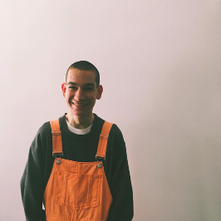
David Duhamel is a MA student in art history at Université de Montréal. They completed their bachelor’s degree at UQÀM (Université du Québec à Montréal) in 2021. more
David has also taken part in various exhibitions by writing in booklets and catalogues. David’s research focuses mainly on representations of speciesism in contemporary Quebecois art. Keywords that highlight my research interests: contemporary art, Quebec, animal studies, speciesism, animal ethics in art, intersectionality. For more information click here. |
|
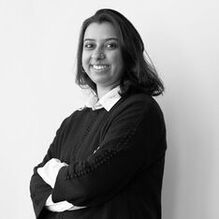
Varda Nisar (she/her) is a Public Scholar and doctoral candidate in Concordia’s Department of Art History in the Faculty of Fine Arts. She has been actively involved in centering art education and community outreach in her former role as the founder of a children's art festival in Karachi, and later as the head of educational programming for the Karachi Biennale. MORE
Varda was a 2015-16 Arthink South Asia Fellow and worked with Spark Arts for Children, as part of her secondment. In 2021, she organized and convened a speaker series titled, (Art + Micro) History: Contemporary Artistic Voices from the South, which drew attention to the specific concerns and artistic modes of resistance in Pakistan. Her current doctoral research focuses on the role that museums in Pakistan are playing in nation-building by positioning them within the global political dynamic. Keywords that highlight my research interests: National museums, Art Education, Biennales and Festivals, hegemony, postcolonialism. |
|
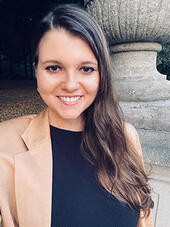
Felicia F. Leu is currently enrolled as a PhD student in the Department of Art History at the Université du Québec à Montréal (UQAM). She studied Psychology (B.Sc., LMU München), Art History and Languages, Literatures, Cultures in Munich, Vienna and Paris (B.A. & M.A., LMU München). Linking psychology and art history, her primary research interest lies in the potential transformative effects of art on its audience. Presently, Felicia’s research concentrates on the multidirectional reception mechanisms of contemporary, socially engaged performances and their local and global performative strategies as a means of communication. She is part of the research project KEEPING IT LIVE: Performance Art Between Archive and Exhibition, directed by Prof. Barbara Clausen. More
Felicia‘s work is also nourished by exhibition practice; she interned internationally in curatorial teams at the Museum of Modern Art in New York (2019), the Centre Pompidou in Paris (2018) and the Haus der Kunst in Munich (2016). In 2020, she curated her first exhibition in collaboration with the Franz Marc Museum (Kochel am See) at the Center for Advanced Studies (CAS LMU) in Munich, Germany. keywords that highlight my research interests Performance and Participation, Reception Mechanisms in Contemporary Art, Transnationalism, Curating, Social Psychology and Art |
|
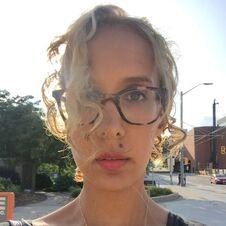
Ashley Raghubir is a MA student in the Department of Art History at Concordia University in Tiohtiá:ke/Montreal and holds a Honours Bachelor of Arts in Art History from the University of Toronto. She is the Winter 2020 Curatorial Intern at the Leonard & Bina Ellen Art Gallery in Tiohtiá:ke/Montreal.
MORE
Ashley is a Research Assistant to the Concordia University Research Chair in Ethnocultural Art Histories, a core member of the Concordia’s Ethnocultural Art Histories Research (EAHR) Student Group, and a graduate student member of Concordia’s EAHR | Media (Ethnocultural Art Histories Research in Media). Her research interests are Afrofuturism in contemporary art, critical race theory, black diaspora studies, public programming as research and pedagogy, and critical curating based in social justice and activism Keywords that highlight my research interests: Afrofuturism, Black Portraiture, Critical Race Theory, Black Diaspora Studies, Transatlantic Slavery Studies, Caribbean Studies, Black Intersectional Feminism, Global Art Histories, Critical Curating, Public Programming. |
|
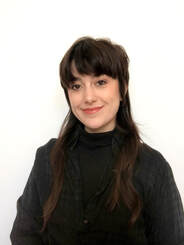
Lorraine Doucet Sisto is a masters student of Art History at Université du Québec à Montréal (UQAM), where she previously completed a bachelor’s degree in Communications. Before assuming her current role as a research assistant for the Worlding Public Cultures project, she worked on various initiatives in the music industry and at a commercial art gallery.
More
Through her ongoing research projects, she committed to centering Indigenous ways of knowing and creating as well as two-spirit and queer imaginaries, aesthetics and ethics. Informed by decolonial, transcultural and transnational perspectives, her research focuses on contemporary art and interdisciplinary artistic practices that are simultaneously poetic, political and critical of institutional and art historical frameworks. Lorraine is currently based in Tiohtià:ke/Mooniyang/Montreal on unceded Kanien'kehá:ka traditional territory, |
|
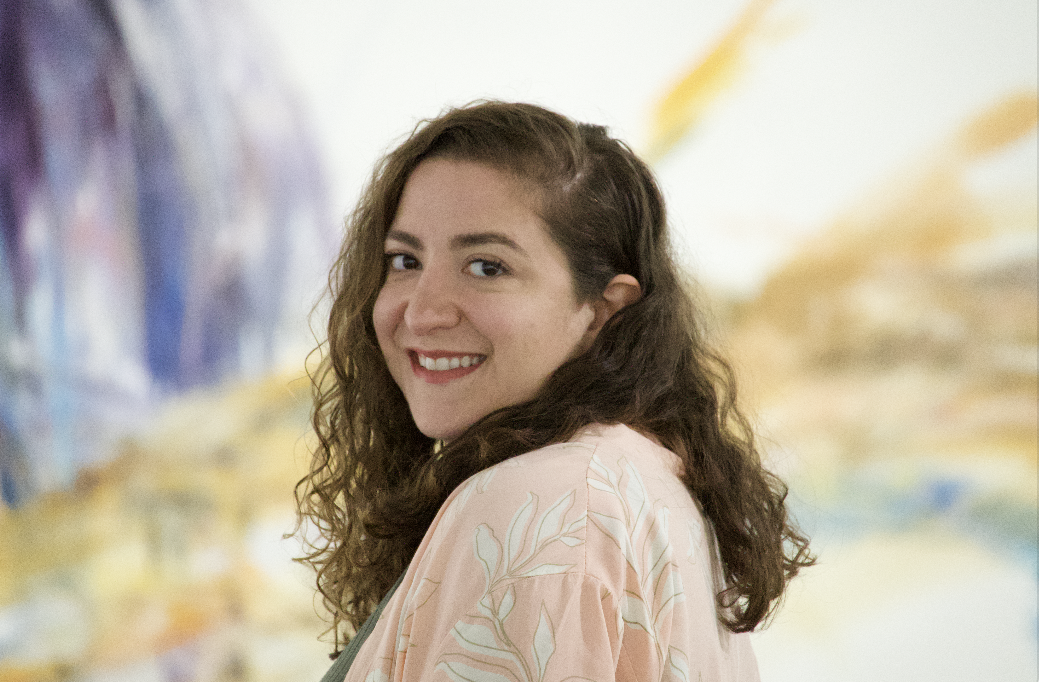
Manar Abo Touk is a Syrian-born Canadian curator and PhD student in the Art History Department at Concordia University. Her dissertation project focuses on contemporary Syrian art post 2011. Specifically, it analyzes displacement on representations of identity by Arab diasporic artists in Canada, Germany, France, Lebanon and the United Arab Emirates.
More
She holds a Masters in Museum and Gallery Studies from Kingston University London, UK, and a Bachelor with double majors in History and Theory of Art and Arts Administration from the University of Ottawa. Manar has worked at the Canadian War Museum and Studio Sixty-Six Gallery in Ottawa, and the aluCine Latin Film+Media Arts Festival in Toronto. She was the Arts Manager and Curator at Al Riwaq Art Space in the Kingdom of Bahrain, and is currently the Curator of Exhibitions and Collections at the Art Gallery of Grande Prairie, Alberta. keywords that highlight my research interests Syrian Art, transnational art, diasporic identities, revolution and war art, global art histories |